

1932: Omega became Official Timekeeper of the Olympic Games. Arriving with one watchmaker and 30 split-second chronographs, it was the first time in history that one company was trusted to time every event.
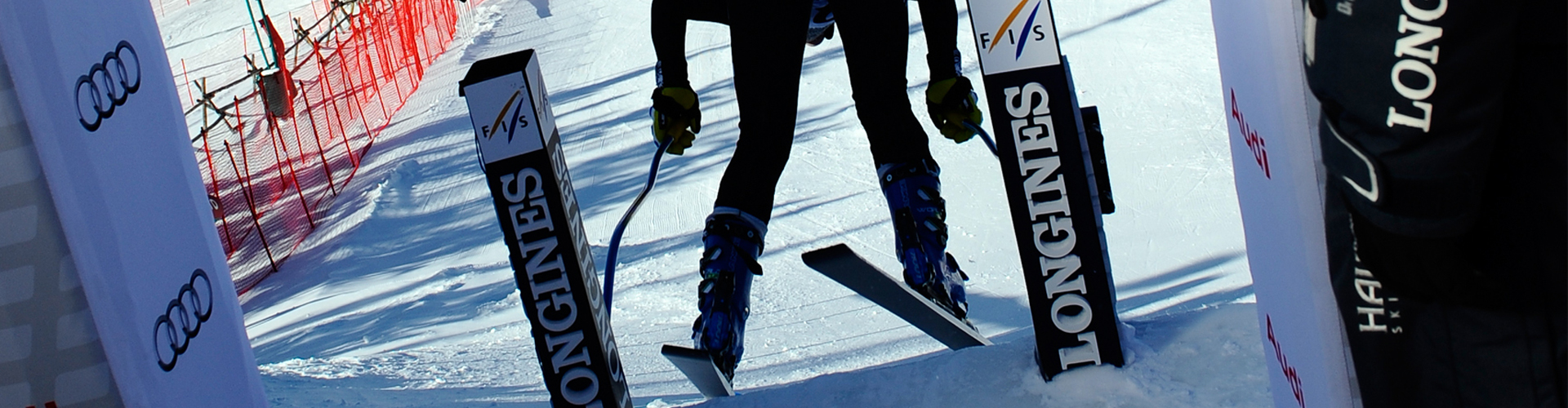
1950: Longines timed the first Alpine Skiing World Championships in Aspen.
1972: Swiss Timing was founded in Biel, Switzerland. Signatories included the Federation of the Swiss Watch Industry (FH), Omega, and Longines.
1973: Swiss Timing measured the World Canoeing/Kayaking Championships for the first time. In the same year, OMEGA Electronics was created.
1976: Swiss Timing measured the summer and winter editions of the Olympic Games in Montreal and Innsbruck. The partner brands were Omega, Longines, and Heuer.
1980: Longines became the Official Timekeeper of the Formula One Grand Prix.
1983: The merger of ASUAG and SSIH resulted in the Société de Microélectronique et d’Horlogerie SA (SMH), the holding company that would later be renamed Swatch Group. The future of Swiss Timing was included as part of that commitment.
1988: OMEGA Sports Timing workshops were relocated to St. Imier, combining the timekeeping teams under the same roof for the first time. The Longines R&D, industrial, and marketing departments were integrated into OMEGA Electronics.
1989: Swiss Timing partnered with the Tour de France and World Cycling Championships on behalf of Tissot.
1990: Swiss Timing partnered with Breitling to time the First World Equestrian Games in Stockholm.
2001: OMEGA and Swiss Timing’s role as Official Timekeeper of the Olympic Games was extended through to the Olympic Winter Games Vancouver 2010.
2005: Swatch Group integrated the sport department at OMEGA Electronics into the Swiss Timing structure, and the following year, Swiss Timing acquired Wige Data and Wige Innovation in Germany and Wige MIC in the Czech Republic. The acquisitions gave the company the profile it enjoys today.
2006: Swiss Timing relocated to its current location in Corgémont, Switzerland.
2009: Swiss Timing’s contract with the IOC was extended to include each edition of the Olympic Games through to Tokyo 2020.
2012: At London 2012, Omega marked 80 years of Olympic Games timekeeping. From 30 split-second chronographs in 1932, the brand was now relying on 450 tonnes of state-of-the-art equipment.
2017: Swiss Timing’s contract with the IOC was extended to include each edition of the Olympic Games through to Brisbane 2032.
2018: At the PyeongChang 2018 Winter Olympics, Swiss Timing deployed wearable sensors at scale, enabling advanced performance analysis through real-time position, motion, and speed tracking.
2020: Swiss Timing introduced distributed timekeeping, reducing on-site infrastructure while establishing cloud-native data pipelines for remote event operations.
2022: Swiss Timing expanded the use of computer vision integrated with AI/ML across multiple sports, enabling a shift from raw data capture to contextual performance analytics and automated insight generation.
2024: Swiss Timing advanced toward fully integrated real-time sports data platforms, aggregating multi-source data to deliver unified insights and enable richer storytelling for sports organizations and broadcasters.

